Lorfan
Lorfan Methodology — Documentation Revision 06

Framework in Practice.

A six-stage process for identifying, mapping, and replacing habitual behaviour patterns. Each stage is documented, reviewed, and archived for individual participants.

Process documentation — Updated 2024
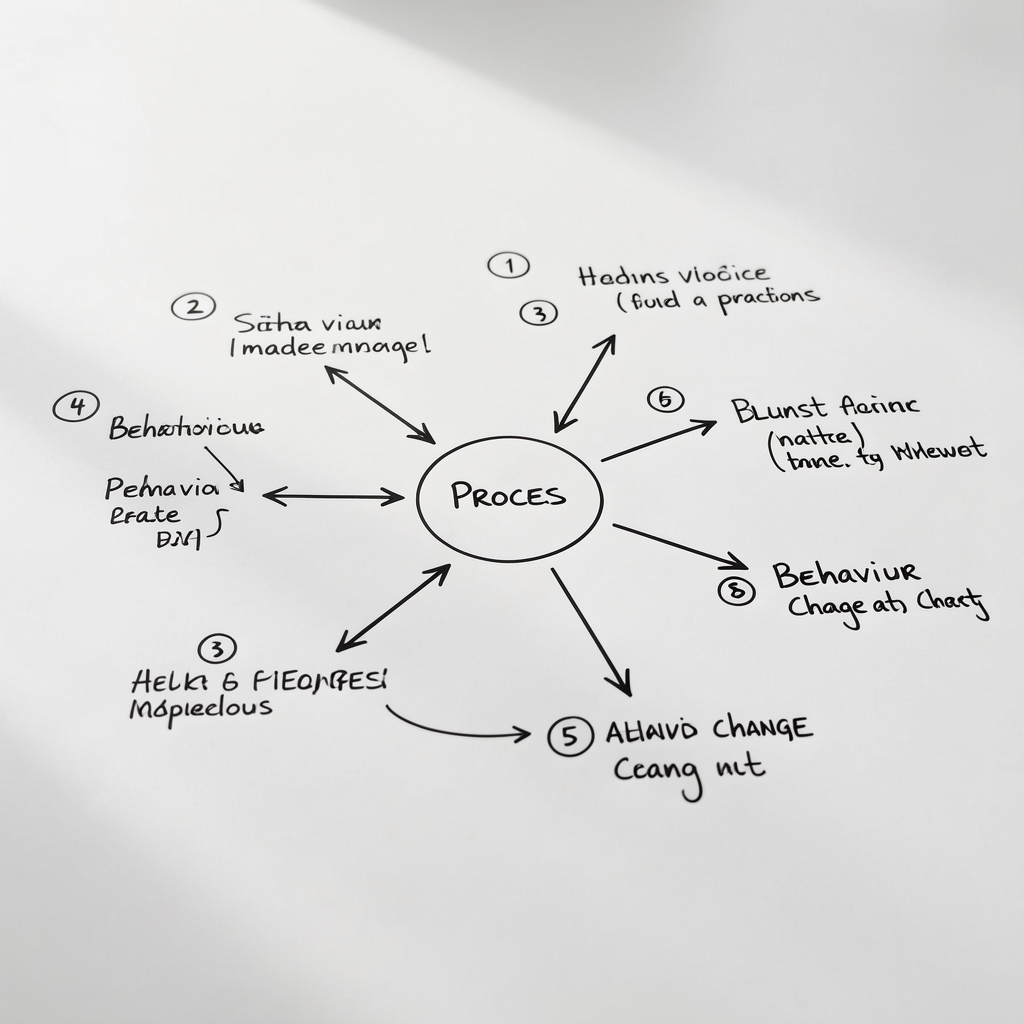
Schematic diagram of a behaviour change process spread on a flat white surface, showing numbered stages with connecting arrows and handwritten annotations
PROCESS MAP — REF: LF-METH-06
REVISION DATE: SEPT 2024
Observation Phase Pattern Mapping Cue Identification Reward Isolation Substitution Design Environmental Audit Habit Stack Construction Cycle Verification Archive Entry Observation Phase Pattern Mapping Cue Identification Reward Isolation Substitution Design Environmental Audit Habit Stack Construction Cycle Verification Archive Entry
01 — The Six Stages

Each engagement follows a documented six-stage sequence.

01
Weeks 1–2

Initial Observation

Participants begin with an uninterrupted documentation period. No changes are proposed during this stage. The sole task is accurate recording of existing daily patterns — what occurs, when, in which sequence. Morning routine, midday behaviour, and evening wind-down are all noted. Caffeine moderation and screen time use are logged without intervention.

Person writing detailed notes in a structured observation journal under warm desk lamp lighting, capturing morning routine entries
Observation journal, Stage 01 entry
02
Week 3

Cue–Routine–Reward Mapping

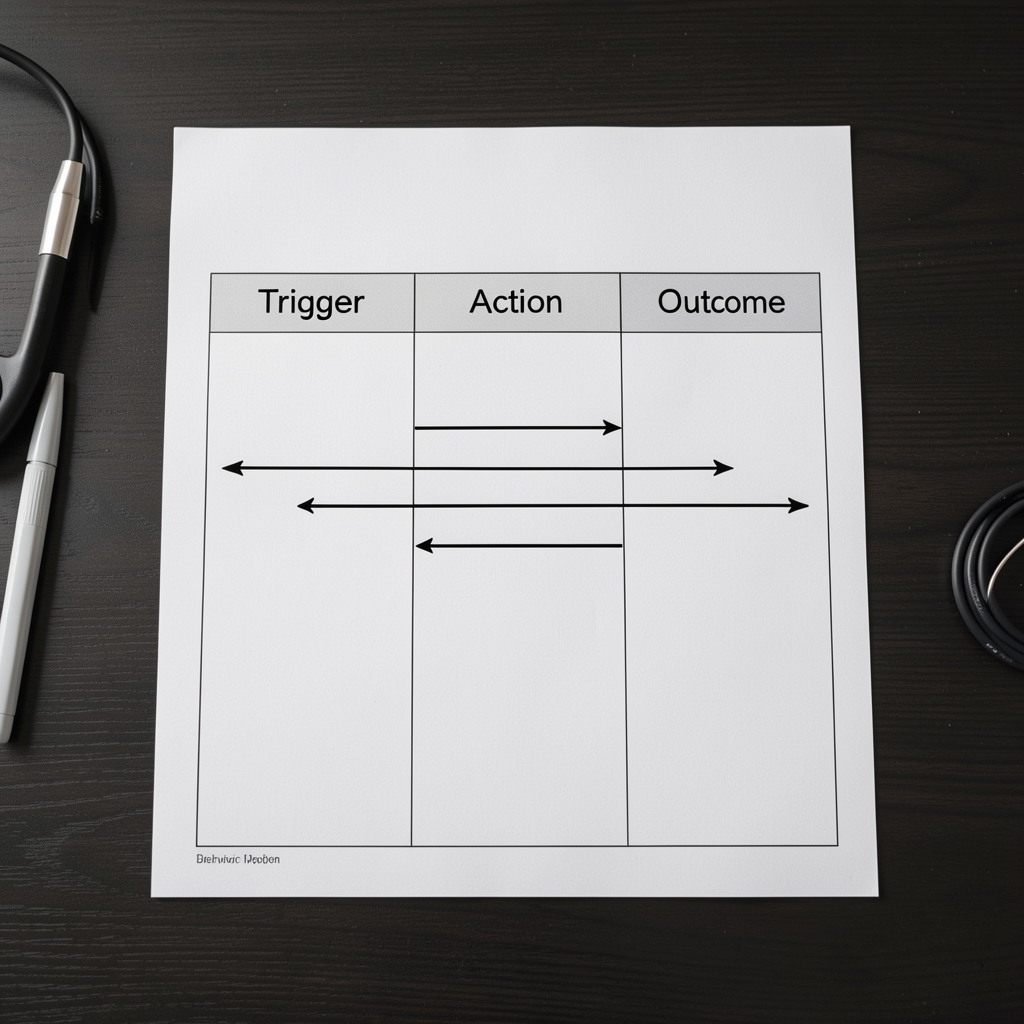
The documentation from Stage 01 is reviewed to identify repeating cue-routine-reward structures. Each undesired habit is mapped to its specific trigger context and the reward function it serves. This stage isolates which environmental conditions are actively maintaining the behaviour — a prerequisite for any effective habit replacement strategy.

Flat-lay of a behaviour mapping worksheet with arrows drawn between trigger, action, and outcome columns on a dark desk surface
Cue-reward mapping worksheet, Week 3
03
Week 4

Environmental Audit

A structured review of the participant's physical and digital environment. The audit identifies which environmental elements amplify cues for undesired routines. Proximity, visibility, and default-state factors are assessed. Environmental design changes — the rearrangement of contextual cues rather than the exercise of willpower — are specified as the primary intervention lever.

Overhead view of a tidy desk being reorganised with books and items arranged deliberately to support focused morning work habits
Environmental redesign session, Week 4
04
Weeks 5–8

Habit Replacement Deployment

Habit replacement strategies are introduced one at a time. Each substitution targets a single cue-routine-reward loop identified in Stage 02. The small steps approach governs scale: each new behaviour is reduced to its minimum viable form to ensure near-zero friction at the point of decision. Sugar habit alternatives, caffeine moderation plans, and screen time reduction maps are assigned in this stage where relevant.

Hand placing a printed habit replacement card next to an existing daily routine checklist on a minimalist desk workspace
Replacement strategy cards, Weeks 5–8
05
Weeks 9–12

Habit Stacking and Integration

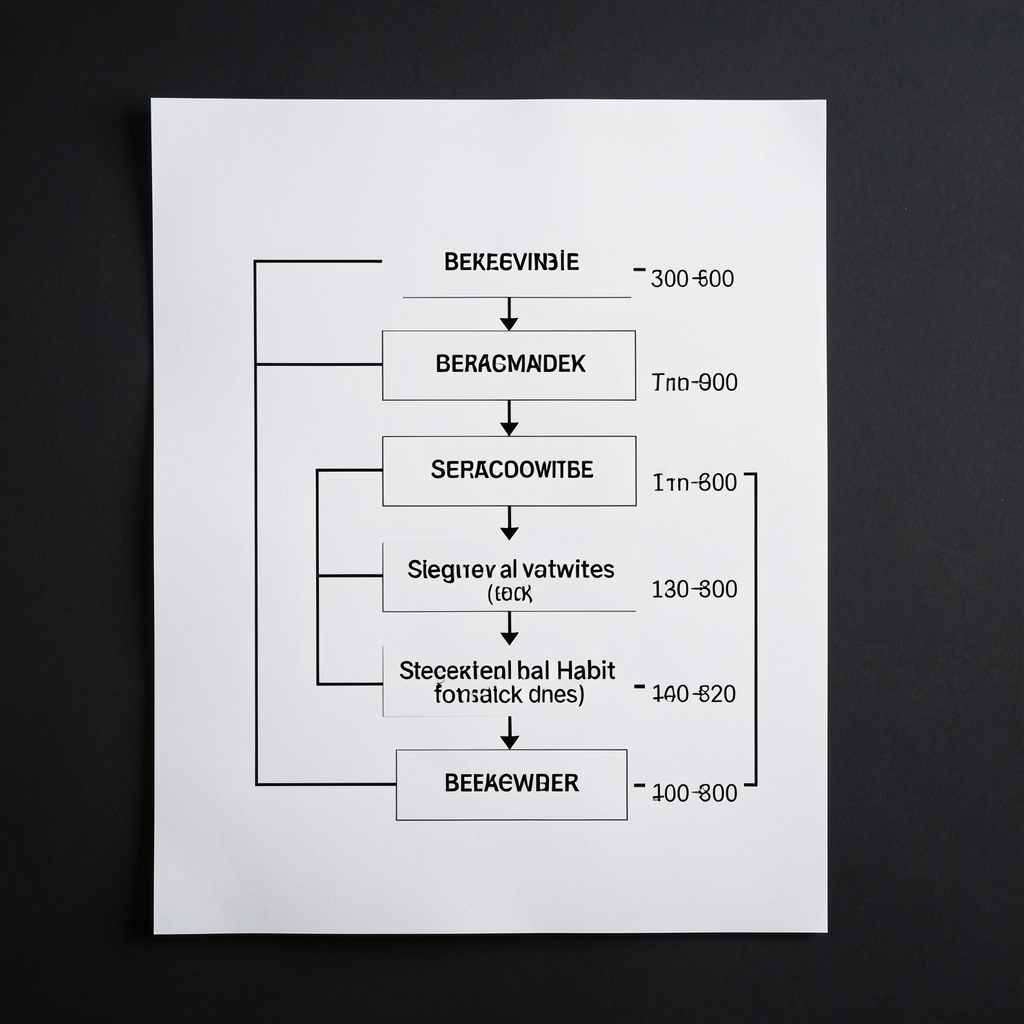
Once individual substitutions have demonstrated a stable three-week record, habit stacking sequences are constructed. New behaviours are attached to existing anchors — established actions that already occur reliably in the daily routine. The dopamine and habits relationship is accounted for in stack construction: sequences are ordered so that immediate reward functions are preserved for each link in the chain.

Sequential habit stack chart showing five behaviours linked in order with time stamps, printed on white paper against a dark background
Habit stack construction chart, Week 10
06
Week 13 — Close

Archive and Verification

At the close of the 90-day cycle, all documentation is compiled into a participant archive entry. The record includes the original observation journals, the cue-routine-reward maps, environmental audit findings, and the final habit stack. Long-term behaviour shift is assessed by comparing the opening observation baseline against the final recorded week. Participants retain their archive as a reference document for maintaining consistency over perfection beyond the programme period.

Closed leather folder containing completed 90-day programme documentation placed on a dark textured surface with a pen resting beside it
Archive folder — 90-day cycle close
02 — Editorial Standards

Research sources and documentation standards applied across all engagements.

Lorfan's framework draws from published behavioural research in habit formation, decision architecture, and routine psychology. No proprietary claims are made regarding outcomes. The methodology is presented as a structured observation and substitution protocol informed by available published literature on how cue-routine-reward cycles form and shift.

All participant documentation is treated as a private written record. Nothing is shared, published, or cross-referenced without explicit written consent. Archive entries remain the property of the participant and are stored in physical form with no cloud-based back-up unless separately agreed.

The field notes published in Lorfan's editorial channels represent composite observations with all identifying details removed. Case summaries are indexed by cycle number and year only — not by participant name, location, or occupation.

03 — Documentation Principles

Four principles govern how Lorfan records and applies behavioural data.

01

Observational Priority

No substitution strategy is introduced until the observation phase is complete. Intervening before patterns are fully documented produces substitutions that target surface behaviours rather than the underlying cue-reward structures. This principle is non-negotiable across all three programme tracks.

02

Minimum Viable Substitution

Each replacement behaviour is designed to be the smallest possible change from the existing routine. Friction reduction at decision point — not motivational enhancement — is the primary engineering goal. A substitution that requires effort to initiate will not sustain through natural variance in willpower and habits cycles.

03

Consistency as Measurement Standard

Programme outcomes are assessed on consistency over perfection. A behaviour performed at 70% fidelity across 90 days is recorded as more structurally significant than a behaviour performed at 100% for three weeks. The journaling for change documentation protocol captures both successful and missed instances without value judgement.

04

Environmental Primacy

Environmental design changes are addressed before habit stacking sequences are built. An environment that passively maintains old cues will undermine even well-designed substitution protocols. The audit stage ensures that the physical context supports new routines before they are formally introduced as part of a stacked sequence.

6
Process Stages
90
Days Per Full Cycle
21
Days — Stage Baseline
1
Substitution at a Time
04 — Research Basis

The published-research basis for Lorfan's framework principles.

The cue-routine-reward model draws from established research into habit loops published across behavioural and cognitive science journals from 2006 to the present. No exclusive or proprietary interpretation is claimed. Lorfan applies the model as a documentation tool rather than a predictive or deterministic framework.

The environmental design principles applied at Stage 03 are informed by published research into choice architecture, default-setting, and contextual cue exposure. The core insight — that reducing the friction of a desired behaviour has greater effect than increasing motivation toward it — appears consistently across the published literature on long-term behaviour shift.

The dopamine and habits relationship referenced in the habit stacking stage reflects current understanding in published neurological behavioural research. Lorfan's application does not extend to specialist or neurological assessment and makes no claims that exceed the scope of behavioural observation and substitution.

Mindful consumption practices, journaling for change protocols, and morning routine anchoring techniques are drawn from practitioner literature and structured programme design guides. These are applied as practical tools within the observation-and-substitution methodology described above.

05 — Methodology Questions

Common questions about the six-stage process.

Early intervention typically targets the visible behaviour rather than the underlying cue and reward. When substitutions are introduced before the cue-routine-reward structure is fully mapped, they are often designed for the wrong trigger context and fail within days. Two weeks of observation produces a reliable pattern record that makes every subsequent substitution more precisely matched.
Stage 03 can be conducted through a structured self-audit form submitted to the Lorfan team. A written or video walkthrough of the primary behaviour spaces — the morning desk area, kitchen, and sleeping environment — is typically sufficient for the cue-visibility assessment. In-person audits are available for London-based participants.
Habit stacks include recovery-entry points — behaviours that can restart the sequence from mid-chain without requiring the full stack from the beginning. Missed days are logged and reviewed without judgement. The journaling for change record distinguishes between a missed day and a structural breakdown of the replacement pattern, which only triggers a review of the substitution design.
Participants receive their archive folder at cycle close. The archive includes the full documentation record and a written summary of which substitutions stabilised, which required revision, and which environmental design changes had the highest recorded effect. Participants are offered an optional follow-up review at the 180-day mark to assess long-term behaviour shift continuity.
06 — Begin

An initial session maps the observation baseline before any framework is applied.

Contact Lorfan to arrange a documentation session. The first meeting establishes which programme track best aligns with the patterns identified in the initial conversation.

Get in Touch