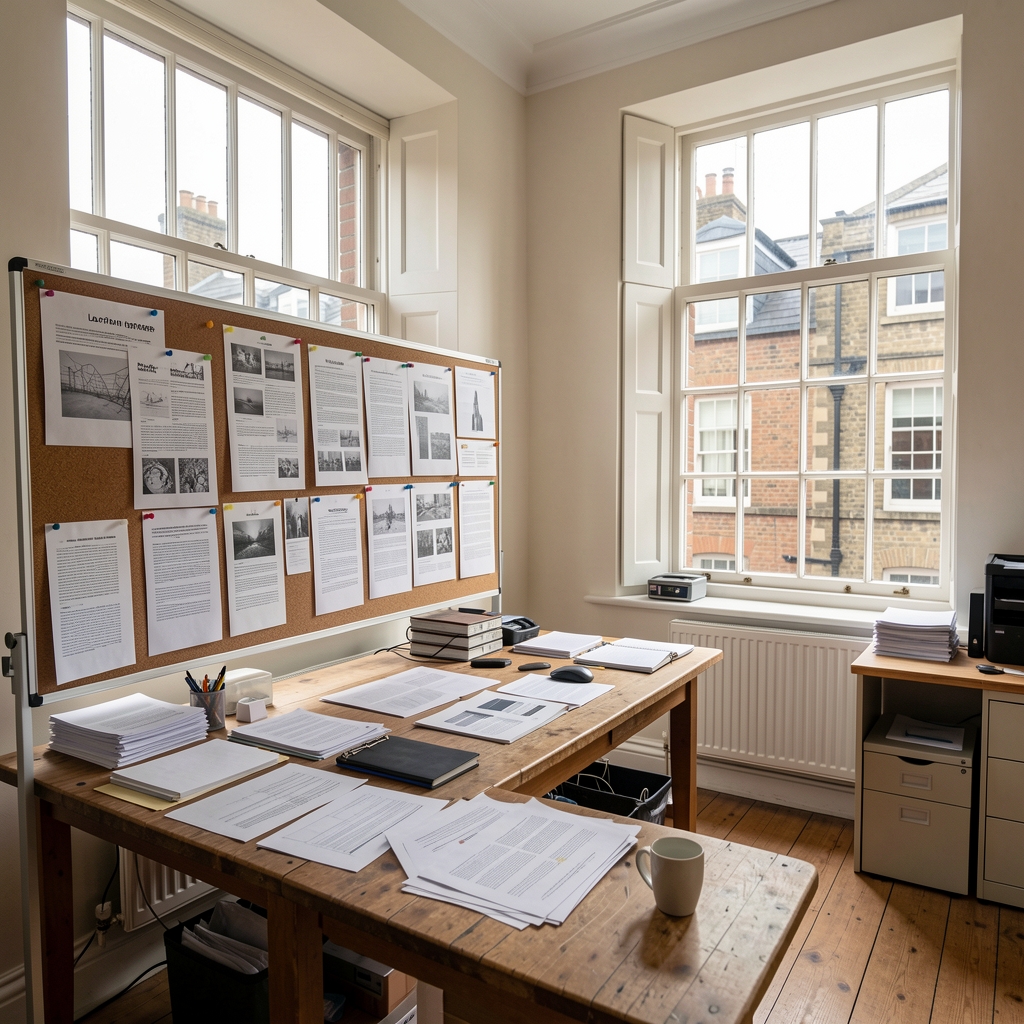
Lorfan emerged from a straightforward observation: the most persistent patterns of daily behaviour — the ones individuals most consistently seek to change — tend to resist effort-based approaches. Motivation rises and falls. Environments remain constant. The tension between these two facts was the starting point.
The organisation was established in London in 2019 by a team with backgrounds in behavioural observation, nutritional research, and programme design. The founding position was that behaviour change operates most reliably through structural adjustment — modifications to the environment, the sequencing of routines, and the architecture of daily decisions — rather than through intensified willpower or extended resolution.
Early documentation cycles focused on morning routine construction and evening wind-down regulation, areas where the relationship between environmental cues and habitual responses is most clearly visible. These formed the basis of what is now the Lorfan three-track programme structure.

No replacement strategy is introduced before a minimum two-week observation period. Participants document existing patterns — the cues, the routine responses, the reward structures — before any substitution is proposed. This sequencing is non-negotiable within the Lorfan framework.
The physical and temporal environment exerts a consistent influence on behaviour that intention does not. Environmental design — rearranging where objects sit, when activities are scheduled, what sensory cues are present — is the primary lever in all Lorfan programmes.
The standard applied across all programmes is not perfect adherence but consistent engagement. Participants who maintain an 80% adherence rate across a 90-day cycle produce more durable long-term behaviour shifts than those who achieve 100% adherence for three weeks and then discontinue.
The Lorfan team drew extensively on published behavioural research in constructing the original programme frameworks. The cue-routine-reward model, habit stacking, and the role of dopamine and habits in reinforcing repeated actions provided a useful structural starting point. However, the observation-first methodology that distinguishes Lorfan from more prescriptive approaches developed from field documentation rather than from the theoretical literature alone.
Across the first eighteen months of operation, it became clear that the gap between published findings on behaviour change and the lived experience of individuals attempting to change specific daily patterns was significant. The research described what happened under controlled conditions; participants described what happened in actual London flats, offices, and commutes.
The current Lorfan methodology represents an attempt to close that gap — to produce frameworks that account for the real conditions under which morning routine construction, screen time reduction, and caffeine moderation actually occur.
Initial observation cycles conducted across twelve London participants. Morning routine documentation established as the primary data collection format. Revision 01 of the cue-identification protocol completed.
The evening wind-down programme was formalised as a distinct track following field observation of screen-related disruption to established morning routines. Mindful consumption guidelines incorporated into the standard evening framework.
The full integration track was codified following analysis of 90-day journal archives from forty participants. The relationship between journaling frequency and sustained behaviour shift confirmed as statistically significant in the field record.
Dedicated sugar habit alternative and caffeine moderation protocols incorporated into all three programme tracks. Revision 12 represented the most substantial update to the standard documentation cycle since the 2020 evening protocol introduction.